
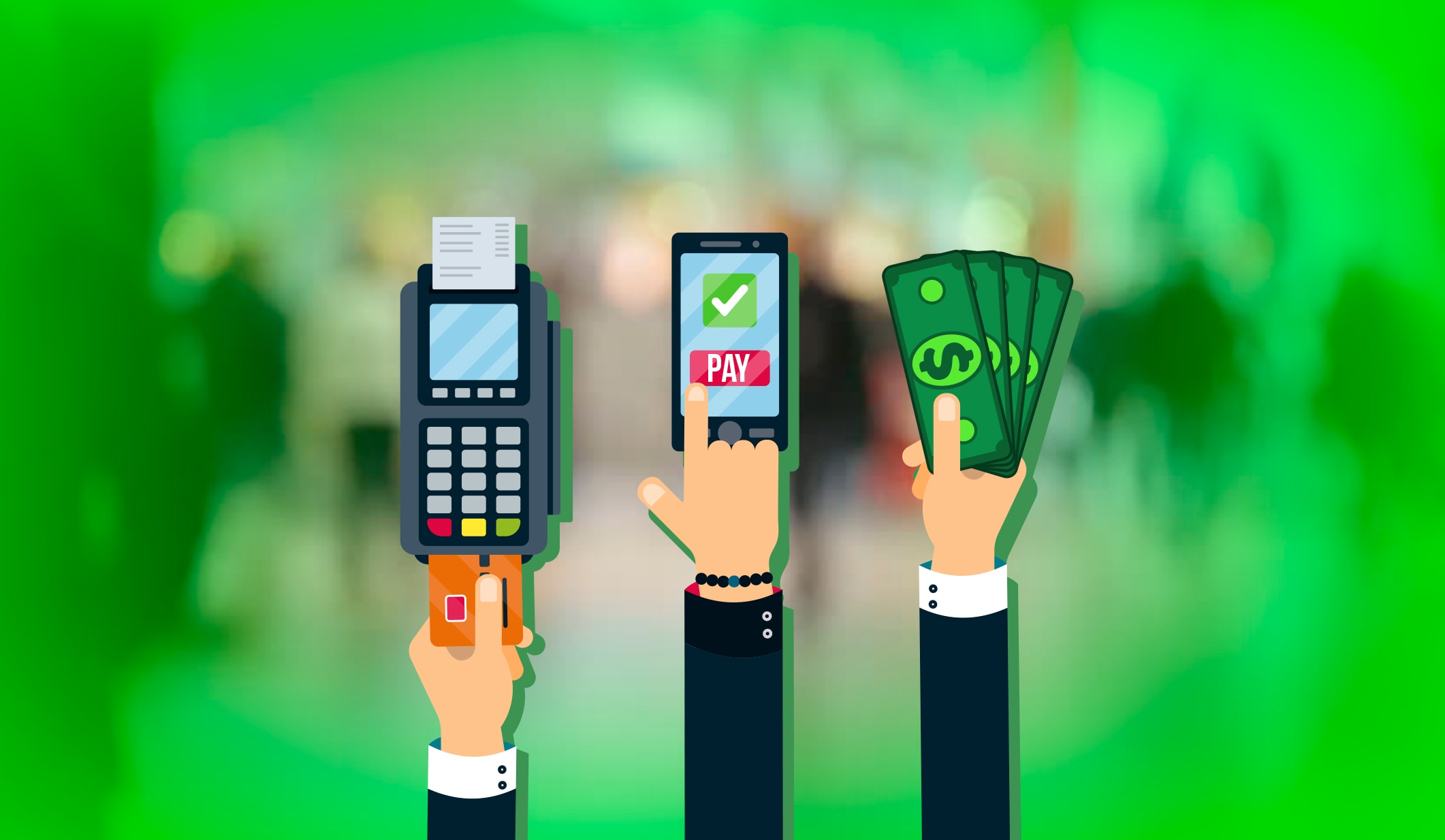
Paying for products or services is something that is part of our daily life, and that we all do it several times a week. Nowadays, thanks to the great advancement of technology, we have various means of payment, both digital and physical.
But, the reality is that, to reach this point, where we have so many options, we have gone through a great process of evolution and transformation, as well as adaptation by the consumer.
At school we were taught that before the monetary system existed as such, people traded products, that is, instead of
paying with money people exchanged goods or services for the same value. Bartering as a commercialization method
lasted until the first developed civilizations arose, when a means of payment was sought that could be adjusted to what each product or service cost, until the currency emerged as a means of payment. So, we stop depending on an element that we could find in nature, but something specifically created as a means of payment to facilitate the exchange.
After the coins, paper money appeared. The first were created in China around the seventh century AD and arose in
the absence of copper to create such coins. These arrived to Europe in the seventeenth century thanks to the usual
exchange of goods between Europe and Asia.
The constant evolution of the societies brought with it new means of payment that over time we have been incorporating with total normality in our lives, such as the credit and debit cards, which were made official approximately in 1955 and which are nowadays part of everyone wallets. With the boom of the Internet, we saw the emergence of electronic commerce and with it the possibility of making online payments for the purchase of all kinds of products and services locally and internationally, which gave way to the emergence of electronic wallets such as PayPal.
According to the study “Global PaymentsReport”, developed by Worldpay in 2017, 13% of the purchases that were made online during 2016 in Latin America, were made through a virtual wallet and it is expected that by 2021 it will reach 22%. % of total purchases. It is incredible how much we have advanced.
Undoubtedly, technology has had a great impact on the evolution of payment methods and even more so with the
arrival of smartphones, which today are the most used tool to make purchases online in most countries. According to Criteo figures, 50% of online purchases in Latin America occur through mobile devices. In the second quarter of 2018, payments processed through mobile devices accounted for 39% of the total volume of global payments for PayPal.
Technology has brought with it several innovations that have transformed the way we make payments. Companies are not lagging behind, and all have been implementing the online payment click on their platforms. An example of this is PayPal OneTouch, a checkout tool that authenticates information quickly on the devices chosen by the user and does not require a password.
The consumer has become a demanding costumer and demands technology, convenience and speed. This has led
companies to increasingly offer innovative products. One of the most recent technological advances is the payment
system using fingerprint biometrics, which has been positioned as one of the favorite methods by modern
consumers. According to the global report Mobile PaymentJourney prepared by Worldpay in 2017, 50% of
online consumers like to make their payments through a biometric data methods.
Thus, many of the means of payment that once set the standard in innovation have become obsolete with the
passing of time. Undoubtedly, this evolution is unstoppable and companies must adapt to all changes to continue
satisfying the needs of consumers and the digitalization of a society that takes technology as DNA. It is definitely a race against time to stay updated. The exchanges of product and physical money are far behind.
Today we are facing a totally different reality. We have advanced from barter to cryptocurrencies. It only remains to
ask ourselves how far this evolution will take us and when we will see the complete disappearance of the cash. The fact is that the history of money is written minute by minute, so. I am sure we will witness many more changes in the coming years.