
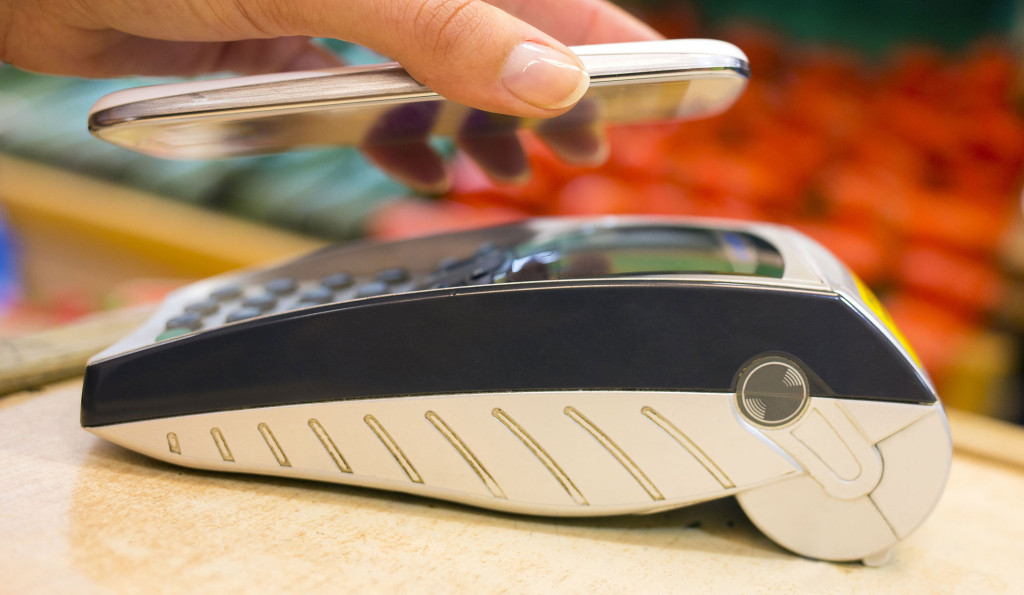
Changes in payment industry are amazing and they happen in a vertiginous way. Nowadays it is almost certain that electronic payments are displacing very quickly cash payments worldwide.
Pagos electrónicos superan al efectivo
According to the latest report of the European Central Bank (sept. 2015), in 2014 the total number of electronic payments exceeded the amount for the previous year, with a total volume of 103 billions of transactions. Card payments reached a 46% from that total, which represented an increase of 8,8% compared to 2013, thus becoming the main method of electronic payment.
Only in the United Kingdom electronic payments overtook cash payments in 2015, being contactless payments the main instrument of payment with a significant growth of 250% compared to 2014, while in the rest of Europe transactions with contactless technology increased in 170%. In the meantime Sweden and Denmark have become the first cashless countries, whose governments have forbidden the use of coins and bills for payments in stores and gas stations. As a consequence of this decision, it is expected that administrative and financial costs related to the use of cash will be drastically reduced.
In this scenario the analysis on contactless payments are very interesting. According to Liisa Kanniainen, Vicepresident of Payment Vision at Nordea Bank, contactless payments are here to stay, cardholders prefer this option because of their benefits, such as confidence, security and easy to use.
This trend to shift cash payments by the electronic money will become more prominent. In line with Euromonitor, for 2016 it is expected that electronic payment will keep its leading position in world statistics, where card payments will be the most preferred method. Although there are methods that could represent a menace for the card as the favorite payment instrument, this device will continue for many years as the preferred one, due to its advantages, such as security and confidence, some of the most important for cardholders.
With regard to the new electronic instruments, the digital wallet and mobile payments highlights undoubtedly among the most attractive instruments and with the highest potential of positioning as preferred methods among the users.
Of course, these changes represent great challenges for banking, which will have to be reinvented in order to adapt to the new payment technologies and offer services that satisfy the expectations of its customers. At the same time, they represent an important opportunity for the actors of payment industry inasmuch they capitalize those transformations and perform a leading role in that scenario.